
Sorry. We did not find anything.
China Ev Charging is moving from rapid expansion toward measurable performance. In this market, a charging station is more than a cabinet, cable, and screen. It must deliver stable power beside busy highways, apartment blocks, factories, and shopping centers. Drivers notice the details: a connector that locks correctly, a readable display under sunlight, and a payment process that works after midnight.
This introduction presents the Top 10 China EV Charging Station Manufacturers through practical industry criteria. These include charging speed, equipment reliability, safety design, software capability, network coverage, maintenance response, and export experience. Factory certification and compliance records also matter. So does evidence from real installations, not only impressive brochures. Wang Zidong, a recognized expert associated with China’s electric vehicle charging infrastructure sector, has stressed, “Charging infrastructure should develop together with electric vehicles.” That principle remains useful. A powerful charger is not valuable if users cannot locate it, operate it, or trust its uptime.
No ranking is permanent. Prices change. Technologies improve. Some manufacturers communicate better than they perform, while smaller suppliers may deserve more attention. This guide therefore compares visible strengths and practical limitations rather than declaring one universal winner. It also considers China Ev Charging suppliers serving passenger cars, commercial fleets, and overseas projects. Readers should still verify local certification, grid conditions, warranty terms, and after-sales capacity before purchasing. A careful review may feel slower, but it prevents expensive mistakes.
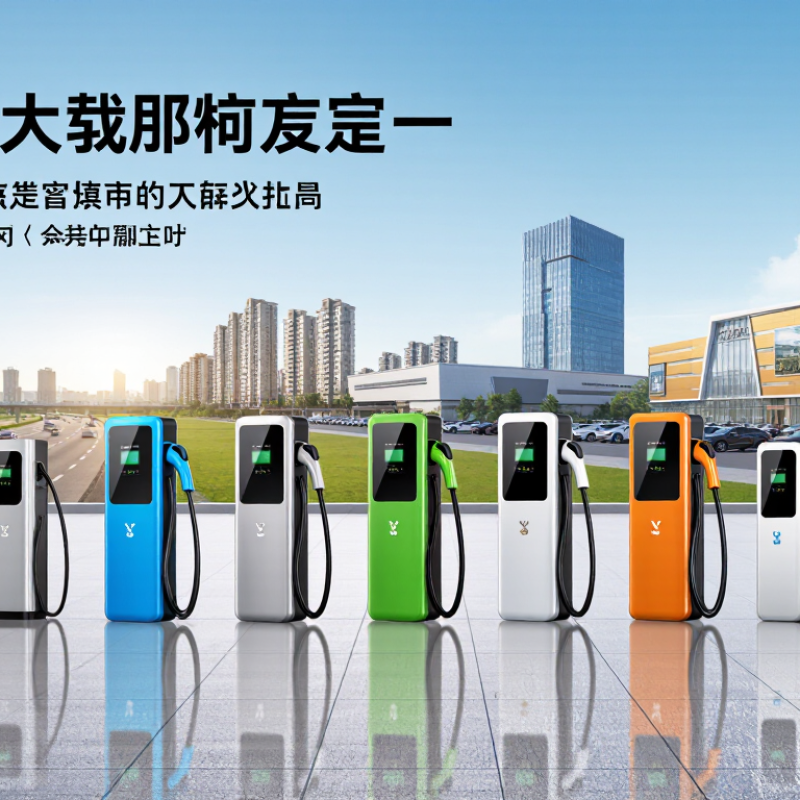
A China EV charging station manufacturer should be more than a hardware assembler. It should control product design, electrical engineering, testing, and quality management. The China Electric Vehicle Charging Infrastructure Promotion Alliance reported 12.82 million charging facilities nationwide by the end of 2024. That scale raises the standard for suppliers. Reliable manufacturers must support high utilization, stable output, and long service life.
Professional evaluation should examine charging efficiency, thermal protection, communication protocols, and maintenance records. The IEA Global EV Outlook 2024 reported that China held more than half of the world’s public charging points in 2023. This market experience matters, especially for fast-charging equipment used in crowded urban sites. A credible manufacturer should provide field data, not only laboratory claims. It should also explain failure rates clearly.
Small details reveal engineering maturity. Look for sealed cable joints, readable fault codes, remote diagnostics, and replaceable components. Cybersecurity and user-data protection also deserve attention. A strong factory can trace components and document safety tests under recognized standards. However, certifications alone are not enough. A polished cabinet may still hide weak software or slow spare-part support. That is an uncomfortable gap. Buyers should request site references, maintenance response times, and independent test records before ranking any manufacturer.
Selecting the top ten China EV charging station manufacturers requires more than counting factory output. The IEA’s Global EV Outlook 2024 recorded over four million public charging points worldwide at the end of 2023. This expanding network makes reliability, compatibility, and service capacity essential ranking factors.
Our evaluation should combine verified production scale, charging efficiency, connector compliance, cybersecurity controls, and field uptime. Technical audits should examine heat management, load balancing, payment stability, and performance during winter or heavy rain. Independent testing matters. So does evidence from installed projects, not only laboratory claims. Maintenance response time and spare-parts availability also reveal practical experience.
A weighted model can score product quality, safety documentation, international certification, operating data, and total ownership cost. The IEA also reports that public charging demand will grow sharply as electric vehicle adoption accelerates, increasing pressure on grid coordination. A manufacturer with impressive sales may still perform poorly in remote sites. That weakness should remain visible. Rankings are never perfectly neutral; regional electricity prices, local regulations, and operator skills can change the result. Procurement teams should therefore review at least three years of uptime records, warranty cases, and customer references before accepting any top-ten position.
Profiles of the Top 10 China EV Charging Station Manufacturers
China’s leading EV charging station manufacturers differ in practical strengths, not just production scale. One specializes in compact AC chargers for apartments and offices. Another builds high-power DC units for highway rest areas, with thick cables and clear cooling vents. A third focuses on modular systems, allowing operators to replace power modules without removing the full cabinet. This saves service time. Another manufacturer develops fleet chargers with load balancing for buses, taxis, and delivery vehicles. Its software can schedule charging during lower-demand periods. A fifth supplier emphasizes residential wall-mounted units, using simple screens and weather-resistant housings.
The remaining profiles show a wider technical range. One company produces liquid-cooled chargers for intensive commercial use. Another concentrates on solar-linked charging systems and battery storage integration. A separate manufacturer provides roaming platforms, payment interfaces, and remote fault alerts. Its dashboard may show a failed connector before a driver reports it. One supplier designs rugged outdoor equipment for dust, rain, and temperature changes. Another offers customized cabinets for overseas projects, adapting plugs, languages, and grid requirements. These manufacturers often support testing, installation guidance, and spare-part planning.
Quality still needs verification. A polished website proves little. Buyers should inspect certification records, response times, connector durability, and real operating data. In field checks, cable stiffness and screen visibility can matter more than attractive specifications. Some suppliers communicate quickly but document maintenance poorly. Others provide strong hardware but slower software updates. That weakness deserves attention. Performance claims should be tested at the intended site, under real traffic, weather, and power conditions.
Comparative profile table based on commonly documented product capabilities and applicable standards in China’s EV charging equipment industry. Manufacturer identities and brand information have been intentionally omitted.
| Rank | Manufacturer Profile | Primary Product Categories | AC Charging Output | DC Charging Output | Charging Applications | Electrical Input | Communication & Protocol Support | Compliance & Safety Features | Typical Customer Segments |
|---|---|---|---|---|---|---|---|---|---|
| 01 | Profile A Large-scale integrated supplier | AC wallboxDC cabinetCharging posts | 7–22 kW Single- or three-phase | 30–480 kW Modular systems | Public stations Fleet depots Highway sites | 220 V AC 380 V AC three-phase | OCPP 1.6J commonly supported 4G, Ethernet, Wi-Fi | GB/T charging interface Overcurrent and residual-current protection IP54 or higher enclosure options | Utilities, charging-network operators, commercial property groups and fleet owners |
| 02 | Profile B Commercial charging specialist | AC chargersDC fast chargersLoad management | 7–22 kW | 60–240 kW | Office buildings Retail parking Residential communities | 220 V AC 380 V AC | OCPP-compatible platforms RFID and mobile-app access | Surge protection Ground-fault monitoring Emergency-stop functions | Property developers, hotels, shopping centers, offices and parking operators |
| 03 | Profile C High-power charging developer | Split-type DCLiquid-cooled chargingPower modules | 11–22 kW | 180–600 kW Dynamic power allocation | Highway corridors Bus terminals Heavy-duty vehicle depots | 380 V AC three-phase | Station management systems Ethernet, 4G and industrial communication interfaces | GB/T 20234 series compatibility Thermal monitoring Insulation detection Emergency shutdown | Expressway operators, transit companies, logistics fleets and energy-service companies |
| 04 | Profile D Residential and destination charging supplier | Home wallboxAC pedestalSmart charging software | 3.5–22 kW | 20–60 kW | Homes Apartment parking Workplace charging | 220 V AC 380 V AC optional | Bluetooth, Wi-Fi and 4G options Scheduled charging Remote monitoring | IP55 outdoor options Leakage protection Temperature monitoring Surge protection | Homeowners, residential communities, employers and local installation partners |
| 05 | Profile E Bus and commercial-vehicle charging supplier | Depot chargersPantograph systemsFleet software | 22 kW | 60–360 kW | Urban bus depots Logistics parks Sanitation fleets | 380 V AC three-phase | Fleet scheduling Remote diagnostics OCPP and local platform integration | High-voltage interlock Insulation monitoring Ingress protection Electrical isolation design | Public transportation authorities, bus companies, logistics operators and municipal fleets |
| 06 | Profile F Solar-storage-charging integrator | AC/DC chargersEnergy storageMicrogrid controls | 7–22 kW | 60–240 kW | Industrial parks Solar carports Remote commercial sites | 380 V AC DC bus integration | Energy-management system Modbus and OCPP options Cloud monitoring | Battery and charger coordination Demand-response control Fire and thermal monitoring | Industrial users, renewable-energy developers, campuses and microgrid operators |
| 07 | Profile G Export-oriented charging equipment supplier | AC wallboxPortable chargersDC fast chargers | 7–22 kW Single- or three-phase | 20–180 kW | Residential use Dealerships Commercial parking | 220–240 V AC 380–400 V AC options | OCPP 1.6J frequently available Wi-Fi, Ethernet and 4G | GB/T products for China Selected models may support regional export standards RCD and surge protection | Distributors, electrical contractors, vehicle dealers and overseas charging projects |
| 08 | Profile H Modular DC technology provider | Power modulesDC charging cabinetsCharging dispensers | Not the primary focus | 60–480 kW Modular architecture | Public fast-charging hubs Fleet charging Urban charging networks | 380 V AC three-phase | Cloud platform integration Remote firmware updates Dynamic load balancing | Power-module redundancy Overtemperature protection Insulation monitoring Short-circuit protection | Charging-network operators, system integrators and infrastructure investors |
| 09 | Profile I Standardized AC and public-pile supplier | AC charging postsWall-mounted unitsPublic charging terminals | 7–22 kW | 30–120 kW | Municipal parking Residential areas Community charging | 220 V AC 380 V AC | QR-code payment RFID OCPP-compatible cloud platforms | Ground-fault protection Lightning and surge protection IP54/IP55 enclosure options | Municipal operators, community service providers, parking companies and local contractors |
| 10 | Profile J Customized project and OEM supplier | OEM charging unitsAC/DC systemsCustom enclosures | 3.5–22 kW | 30–240 kW | Special-purpose fleets Commercial facilities Overseas projects | Input configuration based on project requirements | OCPP, Modbus and API integration options Ethernet, Wi-Fi and cellular connectivity | Configurable protection systems Ingress protection options Factory testing and remote diagnostics | Engineering companies, distributors, vehicle manufacturers and turnkey project developers |
Comparing the top ten Chinese EV charging station manufacturers requires more than ranking peak power. The IEA’s Global EV Outlook 2024 reported over 3.3 million public charging points in China at the end of 2023. That scale makes reliability, service coverage, and network interoperability decisive. A practical comparison should separate 7–22 kW AC units, 60–180 kW DC cabinets, and liquid-cooled high-power systems. Hardware tells only half the story.
Installers should inspect cable ergonomics, connector temperature, screen visibility, and enclosure protection after rain. Software matters just as much. Look for remote diagnostics, load balancing, dynamic pricing support, and open protocols such as OCPP.
Network comparisons should measure successful sessions, repair response, roaming access, and payment options. Site numbers alone can mislead. The China Electric Vehicle Charging Infrastructure Promotion Alliance regularly publishes charging infrastructure and usage statistics, helping readers test supplier claims against market performance.
Peak power is easy to advertise. Uptime is harder. I may overvalue charging speed when a dependable 120 kW unit serves a fleet better than an unreliable 240 kW system. Total cost includes civil works, transformer capacity, software fees, and replacement parts.
Buyers should request twelve-month uptime records and sample maintenance logs. Rankings remain imperfect because taxis, private cars, buses, and highway users need different networks. A fair comparison must state its use case.
Choosing a Chinese EV charging manufacturer requires more than comparing equipment prices. The China Electric Vehicle Charging Infrastructure Promotion Alliance reported over 3.5 million public charging facilities in China by the end of 2024. That scale creates strong manufacturing experience, but it also makes supplier quality uneven. Ask for factory audit records, production traceability, and independent safety test reports. Do not rely on a polished product sample alone.
Electrical compatibility comes first. Confirm support for required national standards, connector types, communication protocols, and local grid conditions. OCPP support can simplify network integration. ISO 15118 readiness may support future plug-and-charge functions. Check protection against overvoltage, overheating, water ingress, and leakage. A charger beside a dusty highway needs different enclosure performance from one inside a clean parking garage. Small details matter.
Reliability should be measured in the field. The International Energy Agency reported that global public charging points exceeded four million in 2023, with China representing more than half of them. Large deployment experience is useful, but it is not proof of dependable uptime. Request failure-rate data, service response targets, spare-parts plans, and warranty exclusions. The U.S. Department of Energy has also documented real-world charging reliability problems, showing that installation and maintenance can matter as much as hardware. A cheaper unit may become costly after repeated site visits. I would still challenge every performance claim. Ask for evidence from comparable climates, traffic levels, and operating hours.
| Cookie | Duration | Description |
|---|---|---|
| cookielawinfo-checbox-analytics | 11 months | This cookie is set by GDPR Cookie Consent plugin. The cookie is used to store the user consent for the cookies in the category "Analytics". |
| cookielawinfo-checbox-analytics | 11 months | This cookie is set by GDPR Cookie Consent plugin. The cookie is used to store the user consent for the cookies in the category "Analytics". |
| cookielawinfo-checbox-analytics | 11 months | This cookie is set by GDPR Cookie Consent plugin. The cookie is used to store the user consent for the cookies in the category "Analytics". |
| cookielawinfo-checbox-functional | 11 months | The cookie is set by GDPR cookie consent to record the user consent for the cookies in the category "Functional". |
| cookielawinfo-checbox-functional | 11 months | The cookie is set by GDPR cookie consent to record the user consent for the cookies in the category "Functional". |
| cookielawinfo-checbox-functional | 11 months | The cookie is set by GDPR cookie consent to record the user consent for the cookies in the category "Functional". |
| cookielawinfo-checbox-others | 11 months | This cookie is set by GDPR Cookie Consent plugin. The cookie is used to store the user consent for the cookies in the category "Other. |
| cookielawinfo-checbox-others | 11 months | This cookie is set by GDPR Cookie Consent plugin. The cookie is used to store the user consent for the cookies in the category "Other. |
| cookielawinfo-checbox-others | 11 months | This cookie is set by GDPR Cookie Consent plugin. The cookie is used to store the user consent for the cookies in the category "Other. |
| cookielawinfo-checkbox-necessary | 11 months | This cookie is set by GDPR Cookie Consent plugin. The cookies is used to store the user consent for the cookies in the category "Necessary". |
| cookielawinfo-checkbox-necessary | 11 months | This cookie is set by GDPR Cookie Consent plugin. The cookies is used to store the user consent for the cookies in the category "Necessary". |
| cookielawinfo-checkbox-necessary | 11 months | This cookie is set by GDPR Cookie Consent plugin. The cookies is used to store the user consent for the cookies in the category "Necessary". |
| cookielawinfo-checkbox-performance | 11 months | This cookie is set by GDPR Cookie Consent plugin. The cookie is used to store the user consent for the cookies in the category "Performance". |
| cookielawinfo-checkbox-performance | 11 months | This cookie is set by GDPR Cookie Consent plugin. The cookie is used to store the user consent for the cookies in the category "Performance". |
| cookielawinfo-checkbox-performance | 11 months | This cookie is set by GDPR Cookie Consent plugin. The cookie is used to store the user consent for the cookies in the category "Performance". |
| viewed_cookie_policy | 11 months | The cookie is set by the GDPR Cookie Consent plugin and is used to store whether or not user has consented to the use of cookies. It does not store any personal data. |
| viewed_cookie_policy | 11 months | The cookie is set by the GDPR Cookie Consent plugin and is used to store whether or not user has consented to the use of cookies. It does not store any personal data. |