China Top 10 Electric Three Wheeler Cargo Suppliers?
China’s electric vehicle industry has produced a wide range of practical cargo tricycles for urban delivery, farming, workshops, and local transport. This guide examines China’s top 10 Electric Three Wheeler Cargo suppliers through product quality, manufacturing experience, export capability, and after-sales support.
The evaluation considers useful details, not only website claims. We look at payload ratings, frame welds, battery options, motor performance, braking systems, cargo-box design, and spare-parts availability. A dependable supplier should explain whether its stated capacity applies to flat roads or demanding conditions. That distinction matters.
Real purchasing decisions involve more than a low quotation. Buyers should review factory evidence, inspection procedures, warranty terms, production lead times, and customization limits. Photographs can help, but they cannot replace a factory audit or sample inspection. A quiet motor is valuable, yet battery life and service access may matter more during daily operations.
Rankings are not permanent.
Supplier performance can change with new models, changing component sources, or weaker communication after payment. Therefore, this overview should support careful comparison rather than promise a universal winner. Regional road rules, battery standards, charging facilities, and import requirements also deserve professional verification before ordering. Some suppliers may appear highly capable but provide limited independent testing evidence. That weakness should be noted, not hidden.
The following selection aims to identify manufacturers with credible production backgrounds and practical cargo solutions. It also highlights where buyers should ask harder questions before signing a contract.
What Are Electric Three-Wheeler Cargo Vehicles?
What Are Electric Three-Wheeler Cargo Vehicles?
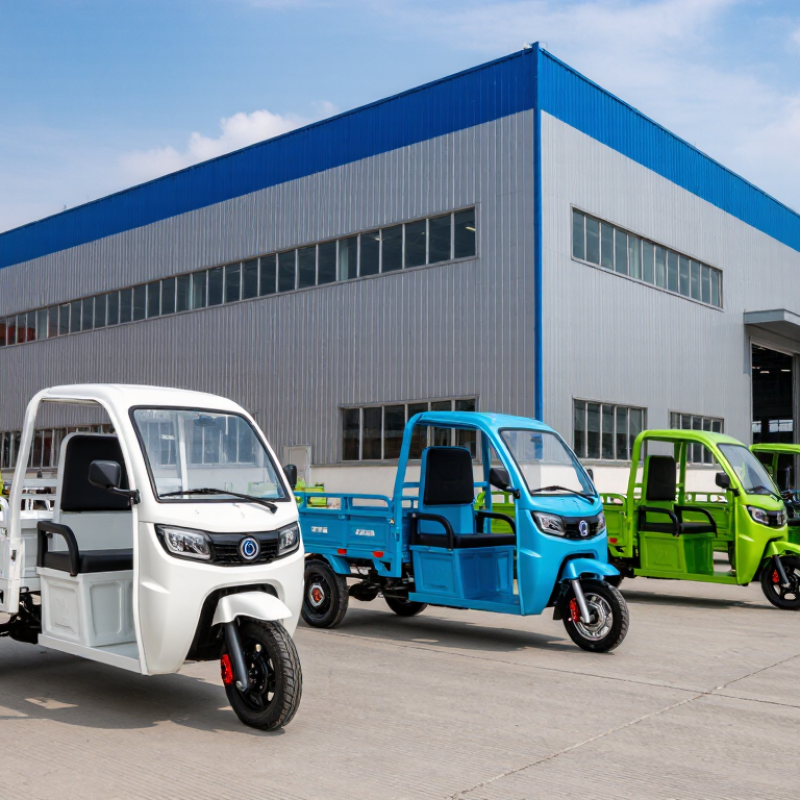
Electric three-wheeler cargo vehicles are compact transport units with two rear wheels and one front wheel. They combine a battery-powered motor, a steel frame, and a cargo bed or enclosed box. Typical uses include market deliveries, farm transport, waste collection, and short urban routes. Their narrow body can enter alleys where vans struggle. Their low-speed design also reduces energy use during frequent stops.
The International Energy Agency’s Global EV Outlook 2024 reports nearly 10 million electric two- and three-wheelers were sold worldwide in 2023. China remains a major manufacturing and export base for this vehicle category. However, sales volume alone does not prove quality. Payload ratings, battery safety, braking performance, and spare-parts access matter more to daily operators. A 1,000-kilogram payload claim may depend on road grade, battery charge, and local testing rules. That detail is often missed.
Tips: Check the real payload, not only the advertised figure. Ask for battery cycle data and charging time. Measure your route first. A larger battery is not always better; it adds weight and cost. In practice, weak suspension can damage cargo on rough roads. This is where many purchasing plans need more reflection. Suppliers should provide clear technical documents, warranty terms, and service training. Buyers should request independent inspection before large orders.
How to Evaluate China’s Top Cargo Three-Wheeler Suppliers
Evaluating China’s top cargo three-wheeler suppliers requires more than comparing catalog prices. Start with factory evidence: production photos, equipment lists, quality procedures, and recent export records. A serious supplier should explain frame materials, welding controls, motor ratings, battery protection, and payload limits in clear terms. Vague answers deserve caution.
Request a sample vehicle and test it under realistic conditions. Measure braking distance, climbing ability, turning stability, and range with a defined load. Check the cargo bed after repeated loading. Small details matter, such as loose fasteners, uneven welds, exposed wiring, or weak hinges.
Ask for test reports and applicable compliance documents, then verify whether they match the exact model. A certificate for another vehicle proves little.
Supplier evaluation should also include service after delivery. Confirm warranty coverage, spare-parts availability, technical manuals, response times, and the process for handling damaged components. Speak with recent customers when possible. Their feedback may reveal delays that polished presentations hide. Price is important, but an inexpensive vehicle can become costly through downtime, battery replacement, or missing parts.
My own assessment would not rely on one factory visit or one successful test. Weather, road conditions, and operator habits can change results. Use written specifications, repeated checks, and a clear purchase agreement. The strongest supplier is not always the largest. It is the one that documents limits honestly and corrects problems promptly.
China’s Top 10 Electric Three-Wheeler Cargo Suppliers
China’s top ten electric three-wheeler cargo suppliers are gaining attention as urban deliveries become more compact. The IEA’s Global EV Outlook 2024 reported more than 8 million electric car sales in China during 2023. This wider ecosystem supports battery sourcing, motor production, and charging development for cargo tricycles. However, car data should not be treated as direct three-wheeler evidence. That distinction matters.
A reliable supplier comparison should examine payload ratings, battery chemistry, frame strength, braking distance, and controller protection. Field testing is essential. A vehicle carrying 500 kilograms may perform differently on wet roads or steep lanes. Check real range with cargo, not only laboratory figures. The top ten should also provide spare parts, technical documents, and responsive warranty service. Reports from the China Association of Automobile Manufacturers offer useful context on electric vehicle growth, but detailed three-wheeler data remains fragmented. That is an industry weakness.
Tips: Request a full specification sheet, battery test records, and sample-unit inspection. Confirm applicable Chinese standards and destination-market requirements. Compare total ownership cost, not purchase price alone. A cheaper chassis may create higher maintenance costs. Supplier rankings can also change quickly; production capacity does not always equal consistent quality. Some conclusions remain imperfect without independent audit data.
How to Compare Their Products, Features, and Prices
China Top 10 Electric Three Wheeler Cargo Suppliers: How to Compare Their Products, Features, and Prices
A strong supplier comparison starts with real operating conditions, not catalog photos. Define payload, road slope, daily distance, charging access, and cargo-box size.
The International Energy Agency reported that China represented about 60% of global electric car sales in 2023. However, that figure does not measure electric cargo three-wheelers directly. Buyers should avoid transferring passenger-vehicle data without checking vehicle-specific evidence.
Request identical specifications from all ten suppliers. Compare battery chemistry, rated motor power, controller protection, brake type, tire size, turning radius, and verified payload.
Ask for independent test records, battery safety documents, factory quality certificates, and warranty terms. A claimed range means little without speed, load, temperature, and road conditions.
Test one loaded vehicle on the intended route. Small details matter.
Price comparisons also need discipline. Separate the vehicle price from batteries, chargers, cargo bodies, shipping, taxes, spare parts, and after-sales support.
BloombergNEF reported a 14% global average decline in lithium-ion battery pack prices during 2023, yet local battery quality and replacement costs still vary widely.
Calculate total cost per operating year. Include electricity, tires, maintenance, downtime, and battery replacement. The cheapest quotation may age badly.
I would also reserve money for unexpected repairs, because supplier brochures rarely show those costs. A practical shortlist should reward transparent data, stable parts supply, and measurable field performance, not merely the lowest offer.
What to Check Before Choosing a Chinese Supplier
Choosing among China’s top ten electric three-wheeler cargo suppliers requires more than comparing online prices. Check whether the factory actually produces the vehicle, rather than trading it through another company. Request a live video tour or an in-person inspection. Look for welding stations, battery testing equipment, spare-part storage, and a clear quality-control process. Photos are not proof.
Ask for detailed specifications, including payload, motor output, battery chemistry, charging time, braking distance, and grade performance. The quoted payload should match a real test, not only a brochure figure. Test the vehicle with a realistic load on uneven roads and slopes. Small details matter, such as frame thickness, tire availability, controller protection, and waterproof connectors. I would also inspect battery labels and request independent test reports. Documents can be incomplete, so verify their issuing laboratory and date.
A reliable supplier should explain production lead times, warranty limits, replacement procedures, and communication channels. Request references from buyers in markets with similar climate and road conditions. Check whether the supplier can provide manuals, packing photos, serial-number records, and compatible spare parts. Payment terms deserve equal attention; avoid rushing into a large order before receiving a pre-production sample. My own mistake would be trusting a polished showroom too quickly. A clean display vehicle may hide weak after-sales support. Before choosing, compare written commitments with what the factory can demonstrate in person.
