What is a Switching Power Supply and How Does It Work?
A Switching Power Supply is a crucial component in modern electronic devices. It converts electrical energy efficiently. This device operates by switching on and off rapidly. This process regulates voltage and current effectively.
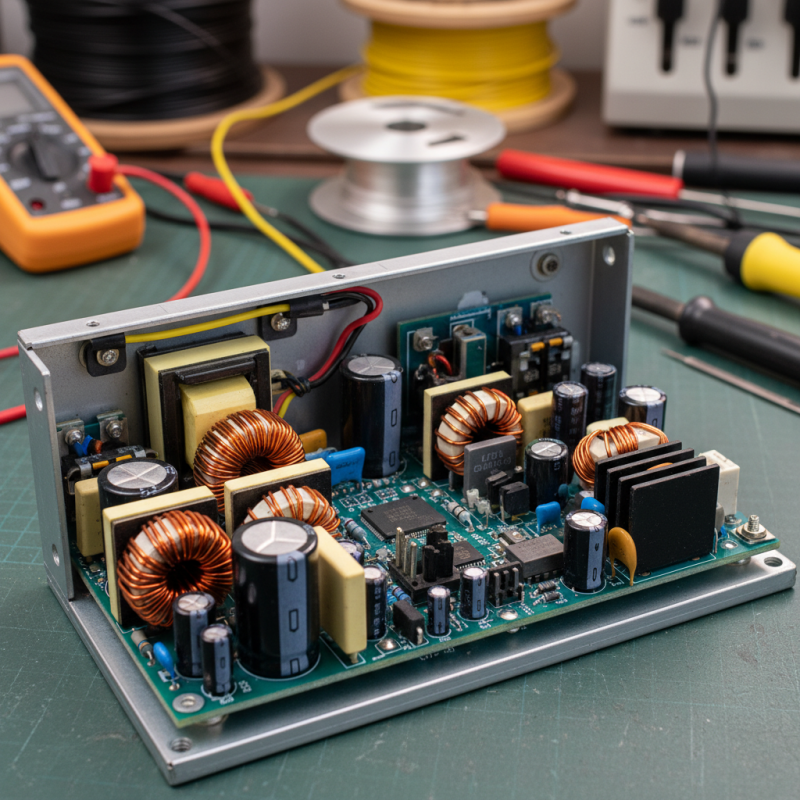
Understanding how a Switching Power Supply works is essential for electronics enthusiasts. The technology behind it is fascinating yet complex. It involves intricate components like inductors and capacitors. These parts play a vital role in energy conversion.
However, not all Switching Power Supplies are perfect. They can introduce noise and electromagnetic interference. Designers must carefully consider these issues. Learning about these limitations is just as important as understanding their operational principles. The balance between efficiency and performance requires thoughtful reflection.
What is a Switching Power Supply and Its Key Characteristics?
A switching power supply (SPS) is an efficient type of power supply that converts electrical energy. Its key characteristic is the ability to regulate output voltage. This is achieved through a process called pulse width modulation (PWM). By rapidly switching the power on and off, it controls the amount of energy passed to the output. The result is a compact and lightweight design, compared to linear power supplies.
Key characteristics of SPS include high efficiency and reliability. Studies show that modern SPS units can achieve efficiencies exceeding 90%. However, this efficiency comes with trade-offs. The switching process generates electromagnetic interference (EMI), which can disrupt nearby electronics. Designers often spend considerable time addressing EMI issues to ensure compliance with regulations.
SPS also comes with a wide input voltage range. This means it can operate in various environments. However, the complexity of design can make troubleshooting challenging. Users may find it difficult to repair or replace components within the power supply. Such issues highlight the need for careful consideration during development and implementation. Balancing efficiency and usability remains a critical concern in the industry.
Switching Power Supply Characteristics
This chart illustrates the efficiency, voltage regulation, and load response of a typical switching power supply. The efficiency indicates how well the supply converts input power to output power, while voltage regulation shows how stable the output voltage is under varying loads. Load response measures the speed at which the supply can adjust to changes in load demands.
The Basic Components of Switching Power Supplies: An Overview
Switching power supplies are essential components in many electronic devices. They convert one voltage level to another efficiently. A switching power supply consists of several key components that work together to achieve this. These include a transformer, diodes, capacitors, and control circuits.
The transformer is crucial for voltage conversion. It steps up or steps down the voltage as needed. Diodes ensure current flows in the right direction. Capacitors filter the output to make it stable. Control circuits manage the overall operation, providing regulation and safety. These components must work harmoniously for optimal performance. However, finding the right balance can be tricky. Not every design reaches its full potential.
Despite their efficiency, switching power supplies can produce noise. This could affect sensitive circuits. Choosing the right components demands careful consideration. Each choice can have a profound impact. A slight oversight may lead to inefficiency or failure. It’s an area ripe for innovation and improvement.
How Switching Power Supplies Convert Electrical Energy Efficiently
Switching power supplies are crucial components in modern electronics. They convert electrical energy efficiently, making devices more compact and lightweight. Unlike linear power supplies, which waste energy as heat, switching power supplies use a method that involves switching elements on and off rapidly. This process minimizes wasted energy, leading to higher efficiency.
One major advantage is how these supplies handle voltage conversion. They can step up or step down voltage levels easily. This adaptability makes them ideal for various applications. For example, when powering smartphones or laptops, the need for compact designs is essential. Switching power supplies meet this demand effectively.
Tip: Ensure proper heat dissipation for your switching power supply. Overheating can lead to performance issues. Also, check the load requirements. An improperly sized supply can struggle to provide sufficient power. Using a unit that exceeds the demand can waste energy too. Reflect on these aspects to enhance efficiency.
Common Applications of Switching Power Supplies in Modern Electronics
Switching power supplies (SPS) have become essential in modern electronics. They convert electrical power efficiently, making them popular in various applications. According to a recent Industry Research report, the global market for switching power supplies is projected to reach $41.5 billion by 2027. This growth reflects the increasing demand for compact and efficient energy solutions.
Common applications include consumer electronics, industrial automation, and telecommunications. In consumer products, SPS provide stable power for devices like laptops and smartphones. They allow these gadgets to be lightweight and portable, yet powerful. The efficiency of these supplies often exceeds 90%, significantly reducing energy consumption. However, many models still emit electromagnetic interference, raising concerns about compliance with environmental standards.
In industrial settings, switching power supplies support machinery that requires precise voltage and current levels. Reliability is paramount in these applications. Yet, some devices may face issues with overheating or short lifespans. Manufacturers must continuously innovate, balancing efficiency, reliability, and durability. These challenges highlight the need for ongoing research and development in power supply technology.
Performance Metrics: Evaluating Efficiency and Reliability in Power Supply Design
When evaluating a switching power supply, efficiency is a critical metric. Efficiency defines how well a power supply converts input power from the outlet to output power. A higher efficiency means less energy wasted as heat. This is crucial in applications where energy conservation matters. Often, power supplies are rated for efficiency levels above 80%. Yet, achieving such ratings consistently can be challenging.
Reliability is another vital performance metric. It affects the longevity of the device. A reliable power supply should operate smoothly over an extended period. Factors like thermal performance and component quality play significant roles. High temperatures can degrade performance over time. Some power supplies fail prematurely due to poor thermal management.
Design choices also impact both efficiency and reliability. Engineers often face a trade-off between cost and component quality. Using cheaper components might reduce initial costs but can lead to failures. On the other hand, investing in high-quality parts improves reliability but increases expenses. Balancing these factors is not always straightforward. Each project poses unique challenges that require careful consideration and adjustments.