10 Low Speed EV Buying Tips for Global Buyers
Buying a Low Speed Ev across borders is not simply a matter of comparing prices and battery sizes. Buyers must examine daily routes, road surfaces, climate, charging access, service support, and local usage rules. A vehicle used on a resort path may need different tires and protection than one used on a farm, campus, or residential community.
Sam Abuelsamid, a transportation electrification analyst, expresses a useful principle: “The best EV is the one that fits the mission.” That idea guides this practical introduction to 10 Low Speed EV buying tips for global buyers. A short test drive can reveal more than a polished brochure. Listen for suspension noise. Check the turning circle. Measure whether two adults can enter comfortably with groceries or work tools. Inspect the charger, cable length, battery label, and warranty terms before discussing discounts.
Look beyond the showroom.
Battery chemistry matters. So does replacement access. In hot regions, heat can reduce battery life and charging performance. In colder areas, range may fall noticeably. Import duties, spare-parts delays, and unfamiliar service networks can also change the real ownership cost. These details are easy to underestimate. I have seen buyers focus on speed, then regret weak brakes or limited ground clearance. No checklist is perfect. A careful buyer may still choose imperfectly. The goal is not to find a universal Low Speed EV, but to match one responsibly with the route, climate, workload, and support available in its market.
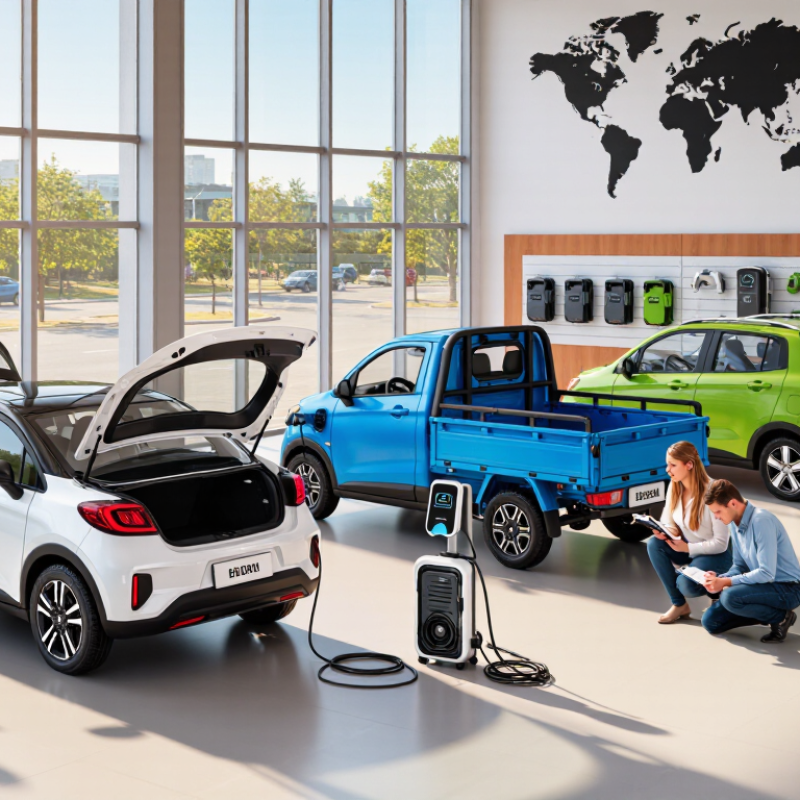
Define Your Daily Needs and Low-Speed EV Use Cases
For global buyers, the first of 10 low-speed EV buying tips is simple: define the vehicle’s daily job. Track your real trips for one week. Record distance, passengers, cargo, road surfaces, gradients, and parking time. A vehicle traveling 12 kilometers daily needs different capacity from one serving a large resort or warehouse.
Do not judge range from a brochure alone. Cold weather, hills, heavy loads, and frequent stops can reduce practical range. Leave a safety margin. It is easy to overestimate your needs, too. A larger battery may add cost, weight, and charging time without improving daily travel.
Short urban trips, gated communities, campuses, farms, and private industrial sites may suit low-speed EVs well.
Public-road use requires checking local speed, registration, lighting, and safety rules.
The International Energy Agency reported nearly 14 million electric cars sold globally in 2023, representing more than 18% of new car sales. That broader growth supports better charging access, but low-speed EV buyers still need a local assessment. Check whether a standard outlet can recharge the vehicle overnight. Measure the route, not just the advertised range. A quiet test drive may reveal awkward turning space, weak hill performance, or limited cargo access. Small details matter.
Check Local Laws, Speed Limits, and Registration Requirements
Buying a low speed EV begins with local rules, not battery size or cabin design. Vehicle categories differ between countries, states, and even nearby cities. A model approved for neighborhood roads may not be legal on main highways. Check the transport authority’s current classification before paying a deposit.
Confirm the permitted top speed, minimum driver age, and licence requirement. Ask whether passengers need seat belts and whether helmets are required. Registration rules may depend on motor power, vehicle weight, or seating capacity. Some areas also require plates, inspection certificates, insurance, or road tax. Write down each requirement. Verbal advice can be incomplete.
Check where the vehicle may travel. A posted 40 km/h limit does not automatically permit every low speed EV. Certain bridges, tunnels, expressways, or urban roads may remain restricted. Contact the local licensing office and request written guidance. If importing, verify customs documents and approval before shipment. I once assumed a small electric vehicle needed no registration because it looked like a cart. That assumption was wrong. Also confirm whether home charging equipment follows local electrical standards. Rules can change, and online forum answers may be outdated. Keep copies of official pages, certificates, and purchase documents. A careful buyer should also ask how ownership transfers after a sale, since registration problems often appear later.
Evaluate Safety Features, Build Quality, and Passenger Protection
10 Low Speed EV Buying Tips for Global Buyers
Evaluate Safety Features, Build Quality, and Passenger Protection
A low-speed EV still shares public roads with heavier vehicles. The World Health Organization reports about 1.19 million annual road deaths worldwide. It also records 20–50 million non-fatal injuries. Small does not mean safe. During a physical inspection, check the steel frame, door hinges, roof joints, and seat mounting points. Look underneath. Uneven welds, exposed wiring, or a poorly sealed battery enclosure deserve careful questions. A polished dashboard can hide weak construction.
Passenger protection requires more than airbags. Confirm three-point belts, adjustable head restraints, strong door latches, child-seat anchors, and a rigid passenger compartment. NHTSA states that seat belts reduce fatal injury risk by 45% for front-seat occupants in passenger vehicles. That statistic is not a decoration. Test every belt for smooth locking and proper retraction. Check whether the vehicle has an independent crash-test rating. If none exists, avoid treating the missing evidence as proof of safety. This is where many buying guides become too optimistic.
Ask for battery safety documentation, including test results for impact, water exposure, and electrical isolation. Where applicable, UN Regulation No. 100 covers electric powertrain safety requirements. Yet compliance labels vary across markets. Read the original documents, not only sales claims. My checklist is not perfect; real-world protection also depends on speed, road design, and occupant behavior. Still, a vehicle with weak doors, thin seats, or vague certification should not carry passengers regularly. A short test drive cannot reveal everything.
10 Low-Speed EV Buying Tips for Global Buyers
Use this practical 100-point checklist to compare low-speed EVs. Give priority to crash protection, active safety, battery safety, structural quality, restraints, and visibility. Always verify local regulations and independent test evidence before buying.
How to use it: Check whether the vehicle has documented safety testing, reliable braking and lighting systems, protected battery components, a rigid passenger cell, secure seat belts, and clear driver visibility. A higher checklist score indicates stronger evidence across the evaluated areas, but it is not a substitute for official certification.
Assess Total Ownership Costs, Warranty Coverage, and After-Sales Support
A low-speed EV can look affordable until the full ownership bill arrives. Compare purchase price with charging, insurance, registration, financing, tires, and routine maintenance. Import duties may also change the final cost for global buyers. Use a three-year estimate, not a showroom guess. Small details matter.
Check how much electricity the vehicle uses in real conditions. Cold weather, hills, heavy loads, and frequent stops can reduce range. Ask for battery replacement pricing and expected capacity loss. Read every line. A low monthly payment may hide expensive financing or service charges. I once overlooked tire costs in a simple budget model, and the mistake made the estimate too optimistic.
Warranty coverage needs equal attention. Confirm the battery, motor, controller, charger, and display have clear coverage periods. Ask whether capacity loss is included, and identify exclusions for water, overloading, or poor maintenance. Warranty support is useful only when service is accessible. Check local repair locations, spare-parts availability, response times, and labor coverage. Request these details in writing. A distant service center can turn a minor fault into weeks of downtime. After-sales quality is often harder to judge than vehicle performance, so speak with owners in similar climates and ask how claims were handled. Their experience may reveal gaps that sales materials do not mention.
