
Sorry. We did not find anything.
Choosing the best Camper Inverter in 2026 requires more than comparing wattage. RVIA industry research reports that more than 11 million U.S. households own an RV, creating strong demand for dependable off-grid power. The market is expanding, but product labels remain inconsistent. Some brands advertise peak output prominently while hiding continuous output in smaller text. That difference matters beside a refrigerator, induction cooker, or medical device.
A reliable selection begins with real electrical loads. A 2,000-watt continuous inverter may run a laptop and television comfortably, yet struggle with a 1,500-watt kettle and compressor startup. Pure sine wave output is usually the safer choice for sensitive electronics. The U.S. Department of Energy also emphasizes that inverter efficiency varies with load, wiring, and conversion design. A high-rated model can still waste energy when operated far below its efficient range. Small details matter.
Battery compatibility deserves equal attention. The International Energy Agency’s Global EV Outlook 2024 documents continuing growth in lithium-ion battery deployment and falling battery costs, but camper systems face different limits than electric vehicles. Charging profiles, low-voltage protection, ventilation, and cable sizing remain critical. Professional guidance from organizations such as RVIA and the National Renewable Energy Laboratory supports careful system matching rather than simple brand comparisons. Still, published figures are not perfectly comparable. Testing conditions differ, and marketing language can blur reality. This guide examines efficiency, waveform quality, safety features, installation demands, noise, and long-term value, helping campers choose with clearer evidence and fewer expensive surprises.
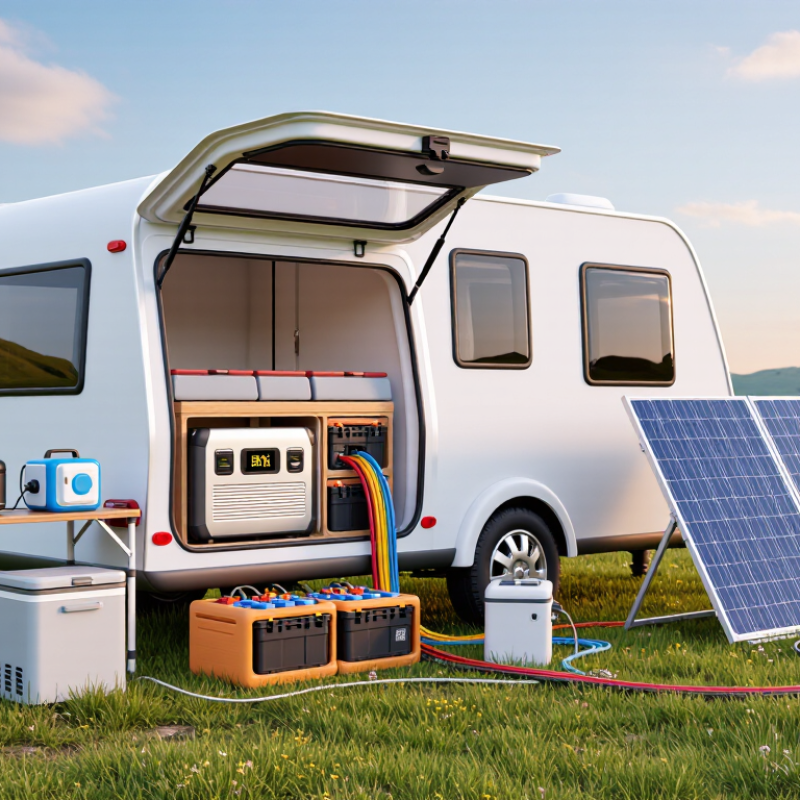
Choosing a camper inverter starts with understanding its type and core function. An inverter converts 12-volt battery power into household-style AC electricity.
The RV Industry Association’s 2024 economic impact study reported 11.2 million U.S. RV-owning households. That scale makes correct electrical planning more important than ever.
Pure sine wave inverters produce smoother power for laptops, medical devices, induction cookers, and sensitive chargers. Modified sine wave models usually cost less, but they may create buzzing, excess heat, or poor motor performance. Pure sine is safer.
An inverter-charger combines three functions: DC-to-AC conversion, battery charging, and automatic shore-power transfer. This design can simplify campsite use, though it also adds installation complexity.
A basic inverter may suit occasional laptop charging. A larger system needs continuous-watt and surge-watt calculations. Refrigerators, pumps, and compressors can demand two to five times their running power during startup.
The U.S. Department of Energy’s Energy Saver guidance also emphasizes that inverter efficiency changes with load, cable length, and heat. Oversizing is not always wise. I have seen owners choose high capacity, then lose energy through idle consumption. That mistake deserves more attention.
Look for low-voltage shutdown, overload protection, thermal protection, and clear status monitoring. Check the battery chemistry and maximum current before purchase.
A 2,000-watt inverter can draw roughly 185 amps from a 12-volt battery at 90% efficiency. Thin cables will heat quickly.
NFPA 1192 guidance supports proper overcurrent protection and secure wiring in recreational vehicles. Local installation rules still matter.
My own preference is conservative sizing, although that can limit future upgrades.verter.
Choosing the right camper inverter starts with an honest power audit. List every device you may use at the same time. Include a refrigerator, lights, laptop, fan, microwave, and water pump. Write down each appliance’s running watts. Check the rating label or the manufacturer’s manual. Do not rely on memory. Small devices add up quickly.
The inverter must handle continuous demand and short startup surges. Motors and compressors often need two or three times their running power. For example, a refrigerator using 120 watts may briefly require 300 watts. Add the running watts together, then include the largest expected surge. A practical reserve of 20 to 30 percent helps prevent overloads. Too much reserve, however, can increase cost and idle power use.
Convert your daily needs into watt-hours. Multiply each device’s watts by its hours of use. A 60-watt fan running for five hours uses 300 watt-hours. Add all appliances together. Then allow for inverter losses, commonly around 10 to 15 percent. Battery voltage matters too. At 12 volts, a 1,000-watt load can draw more than 80 amps. That is substantial. Use suitable cables, fuses, and ventilation. Your first estimate may still be imperfect. Camping habits change with weather, guests, and charging needs. Measure actual consumption during a short trip, then adjust the inverter and battery plan.
Choosing an inverter starts with your real power needs, not the largest number on the box. List each appliance, its running wattage, and its starting surge. Refrigerators, pumps, and some chargers may demand twice their running power briefly. Add a safety margin of 20 to 30 percent.
A 1,000-watt inverter may suit lights, laptops, and camera batteries. A coffee maker or induction cooker may require 2,000 watts or more. Bigger is not always better. An oversized inverter can waste battery power during light use.
A pure sine wave produces electricity closer to household power. It usually runs medical devices, audio equipment, motors, and modern chargers more quietly. Modified sine wave models may cost less, but they can create humming, extra heat, or charging problems.
I have seen a small fan run, yet sound noticeably rougher. That detail is easy to ignore until night camping.
Tips:
Compare efficiency at your usual load, not only the advertised peak. An inverter rated at 90 percent efficiency may perform worse when powering a tiny device. Check idle consumption, cooling noise, cable size, and low-voltage protection. Keep cables short and properly sized. Thin cables become warm and reduce performance.
I once focused too much on peak output and overlooked standby drain. That was a useful mistake.
A reliable choice balances waveform quality, usable capacity, heat control, and your actual camping habits.
Choosing a camper inverter starts with safety, not wattage. The RV Industry Association recorded 342,220 wholesale shipments in 2024, showing how many mobile electrical systems need careful upgrades. Look for certified equipment, over-temperature protection, overload shutdown, short-circuit protection, and low-voltage alarms. UL 458 covers power converters and inverters used in recreational vehicles. Compliance does not guarantee a perfect installation, though. Measure twice.
Battery compatibility requires more than matching voltage. A 12-volt lithium battery may need different charging limits than an AGM battery. Check continuous output, surge capacity, charging profile, and allowable current. BloombergNEF’s 2024 Battery Price Survey reported a 20% fall in average lithium-ion pack prices, reaching 115 dollars per kilowatt-hour. Lower prices can encourage larger banks, but larger batteries also demand better cables, fuses, ventilation, and monitoring. Heat matters.
Installation space is easy to underestimate. Leave airflow around the inverter, protect cables from sharp metal edges, and place fuses close to the battery. A 2,000-watt inverter can draw roughly 167 amps from a 12-volt system before losses. That current can expose weak connections quickly. My earlier mistake was trusting the display instead of checking cable temperature under load. Use a qualified installer when calculations feel uncertain, and verify the finished system against the vehicle and battery manufacturers’ instructions.
Compare common camper inverter configurations by safety features, battery compatibility, electrical capacity, and installation requirements before making a selection.
| Inverter Configuration | Typical Continuous Output | Suitable Loads | Recommended Battery System | Approximate DC Current at Full Load | Waveform | Important Safety Features | Installation Requirements | Best Use Case |
|---|---|---|---|---|---|---|---|---|
| Compact pure-sine inverter | 300–600 W | Phone chargers, cameras, laptops, small televisions, and low-power electronics | 12 V battery bank | Approximately 30–60 A at 12 V, depending on efficiency and load | Pure sine wave | Overload protection, short-circuit protection, over-temperature shutdown, low-voltage shutdown, and input reverse-polarity protection | Short, correctly sized DC cables; fuse or circuit breaker close to the battery; airflow around the inverter | Small campers and occasional electronics use |
| Medium pure-sine inverter | 1,000–1,500 W | Microwave ovens, coffee makers, small kitchen appliances, televisions, and moderate tool loads | 12 V battery bank; a 24 V bank can reduce cable current in larger installations | Approximately 90–150 A at 12 V under full load | Pure sine wave | All standard electronic protections plus low-battery alarm, thermal fan control, and clearly rated AC output protection | Heavy-gauge DC wiring, battery-side overcurrent protection, secure chassis mounting, ventilation, and an appropriately rated AC transfer or distribution arrangement | Most family campers needing short-duration appliance operation |
| High-capacity pure-sine inverter | 2,000–3,000 W | Multiple appliances, larger microwave ovens, induction cooking equipment, refrigeration equipment, and selected power tools | 24 V battery bank preferred; 12 V systems require very high current cabling | Approximately 85–150 A at 24 V under full load | Pure sine wave | Overload and short-circuit protection, thermal shutdown, low-voltage cutoff, ground-fault protection where applicable, and programmable battery-voltage limits | Professional-level cable sizing, high-current fusing, robust busbars, battery ventilation where required, adequate cooling clearance, and careful separation of AC and DC wiring | Full-size campers with substantial off-grid electrical demand |
| Inverter-charger | 1,000–3,000 W | AC appliances plus automatic battery charging when connected to shore power or a generator | 12 V or 24 V battery bank, matching the unit's specified input voltage | Depends on output rating and battery voltage; a 2,000 W load may exceed 160 A on a 12 V system | Pure sine wave | Input overcurrent protection, transfer switching, charging-stage control, low-voltage protection, temperature compensation, and configurable charge limits | AC and DC installation must follow local electrical rules; requires shore-power integration, grounding, neutral management, battery fusing, and correct charger settings | Campers that regularly switch between shore power and battery power |
| Inverter with solar charging function | 1,000–3,000 W inverter output; solar charge capacity varies by model | Camper appliances while also accepting energy from photovoltaic panels | 12 V or 24 V battery bank, with chemistry and charge limits supported by the unit | Inverter current is determined by AC output; solar charging current is separately limited by the charge controller | Pure sine wave | PV input overvoltage protection, battery overcharge protection, temperature monitoring, reverse-current protection, and low-voltage shutdown | Requires correctly rated PV isolator, string fusing where required, suitable solar cable, battery protection, ventilation, and separation between PV, battery, and AC circuits | Off-grid campers using solar as a primary charging source |
| Modified-sine inverter | 300–2,000 W | Some basic resistive loads, such as simple heaters or incandescent lamps | 12 V or 24 V battery bank, according to the inverter rating | Varies with output; current rises substantially as voltage decreases and load increases | Stepped or modified sine wave | At minimum, look for overload, short-circuit, over-temperature, and low-voltage protection | Still requires a battery fuse, suitable DC cables, ventilation, and secure mounting; check appliance compatibility before use | Budget applications with simple loads only; generally less suitable for sensitive electronics and motor-driven equipment |
| Low-frequency transformer inverter | 1,000–3,000 W | Loads with high starting surges, including some compressors, pumps, and power tools | 12 V or 24 V battery bank with adequate surge-current capability | High during startup; battery, fuse, and cable ratings must account for surge demand | Usually pure sine wave | High surge handling, thermal protection, overload shutdown, short-circuit protection, and low-voltage cutoff | Requires substantial mounting support because transformer-based units are heavier; use short, high-current cables and generous ventilation clearance | Campers operating equipment with demanding startup currents |
Choosing the best camper inverter starts with your travel style, not a glossy specification sheet. A weekend camper may only need power for phones, lights, and a small laptop. Full-time travelers often run refrigeration, camera equipment, or medical devices. List each appliance, its running wattage, and its starting surge. Do not size the inverter by average use alone. A refrigerator can briefly demand twice its rated power.
Your budget should include cables, fuses, ventilation, and battery capacity. A cheaper inverter may become expensive if it wastes energy or overheats. Pure sine wave output is usually the safer choice for sensitive electronics and motors. Check continuous wattage, peak wattage, idle consumption, and protection against low voltage. These figures matter more than impressive packaging. During a cold-weather trip, I noticed that thick cables reduced voltage drop and prevented unexpected shutdowns. Small details matter.
Leave room for growth.
Noise also affects your travel style. A fan that runs constantly can disturb a quiet campsite, while heavy use requires reliable cooling. My first estimate was too optimistic because I ignored startup loads. That mistake taught me to measure real consumption with a watt meter. For a limited budget, buy adequate capacity rather than the largest unit available. Keep the inverter close to the battery, protect the wiring properly, and allow clear airflow. Test the setup at home before relying on it beside a remote road.
Select an inverter according to your travel style, expected appliance load, surge requirements, and budget. The chart shows practical planning capacities for common camper use cases without comparing specific brands.
How to read the chart: Choose a continuous output that covers the appliances you expect to run at the same time. The surge rating should handle the brief startup demand of devices such as refrigerators, pumps, compressors, and power tools.
Budget guide: A light-use setup commonly falls near $150–$300, a comfort setup near $300–$700, a remote-work setup near $600–$1,200, and a full-time off-grid setup near $900–$1,800. Actual costs vary with installation, battery voltage, wiring, safety equipment, and power requirements.
| Cookie | Duration | Description |
|---|---|---|
| cookielawinfo-checbox-analytics | 11 months | This cookie is set by GDPR Cookie Consent plugin. The cookie is used to store the user consent for the cookies in the category "Analytics". |
| cookielawinfo-checbox-analytics | 11 months | This cookie is set by GDPR Cookie Consent plugin. The cookie is used to store the user consent for the cookies in the category "Analytics". |
| cookielawinfo-checbox-analytics | 11 months | This cookie is set by GDPR Cookie Consent plugin. The cookie is used to store the user consent for the cookies in the category "Analytics". |
| cookielawinfo-checbox-functional | 11 months | The cookie is set by GDPR cookie consent to record the user consent for the cookies in the category "Functional". |
| cookielawinfo-checbox-functional | 11 months | The cookie is set by GDPR cookie consent to record the user consent for the cookies in the category "Functional". |
| cookielawinfo-checbox-functional | 11 months | The cookie is set by GDPR cookie consent to record the user consent for the cookies in the category "Functional". |
| cookielawinfo-checbox-others | 11 months | This cookie is set by GDPR Cookie Consent plugin. The cookie is used to store the user consent for the cookies in the category "Other. |
| cookielawinfo-checbox-others | 11 months | This cookie is set by GDPR Cookie Consent plugin. The cookie is used to store the user consent for the cookies in the category "Other. |
| cookielawinfo-checbox-others | 11 months | This cookie is set by GDPR Cookie Consent plugin. The cookie is used to store the user consent for the cookies in the category "Other. |
| cookielawinfo-checkbox-necessary | 11 months | This cookie is set by GDPR Cookie Consent plugin. The cookies is used to store the user consent for the cookies in the category "Necessary". |
| cookielawinfo-checkbox-necessary | 11 months | This cookie is set by GDPR Cookie Consent plugin. The cookies is used to store the user consent for the cookies in the category "Necessary". |
| cookielawinfo-checkbox-necessary | 11 months | This cookie is set by GDPR Cookie Consent plugin. The cookies is used to store the user consent for the cookies in the category "Necessary". |
| cookielawinfo-checkbox-performance | 11 months | This cookie is set by GDPR Cookie Consent plugin. The cookie is used to store the user consent for the cookies in the category "Performance". |
| cookielawinfo-checkbox-performance | 11 months | This cookie is set by GDPR Cookie Consent plugin. The cookie is used to store the user consent for the cookies in the category "Performance". |
| cookielawinfo-checkbox-performance | 11 months | This cookie is set by GDPR Cookie Consent plugin. The cookie is used to store the user consent for the cookies in the category "Performance". |
| viewed_cookie_policy | 11 months | The cookie is set by the GDPR Cookie Consent plugin and is used to store whether or not user has consented to the use of cookies. It does not store any personal data. |
| viewed_cookie_policy | 11 months | The cookie is set by the GDPR Cookie Consent plugin and is used to store whether or not user has consented to the use of cookies. It does not store any personal data. |